English Through Pictures for Kids: A Guide
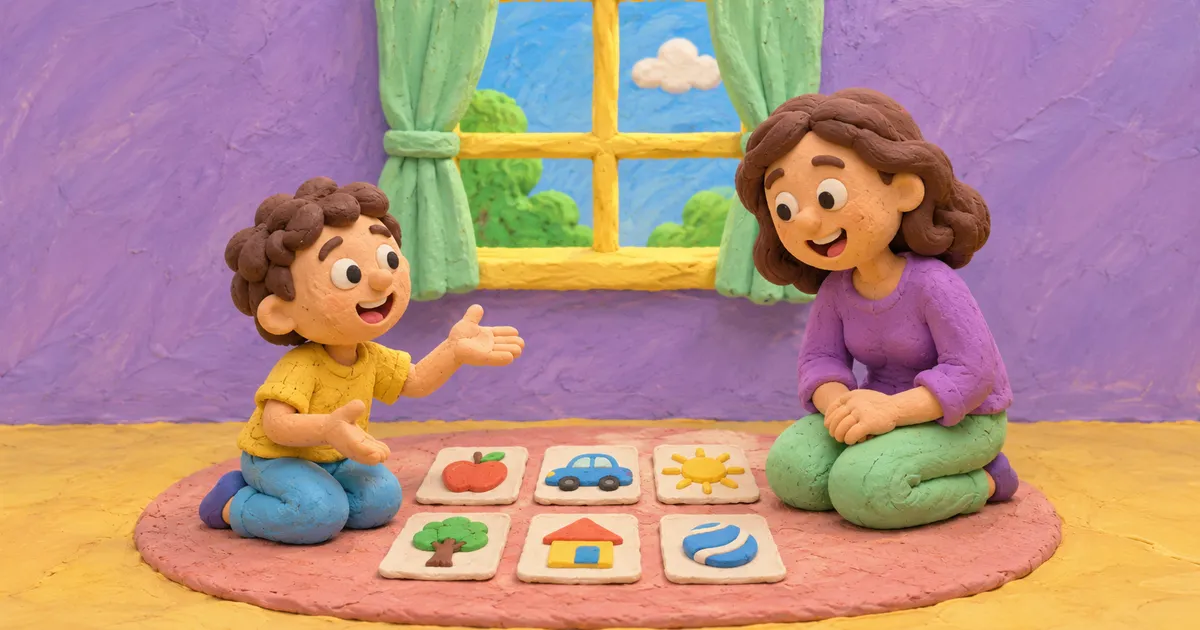
Using english through pictures for kids links an image with a spoken or written English word, phrase, or sentence. The picture supplies meaning without translation for every word. Start with familiar objects, ask focused questions, and revisit the images in short sessions. Children can name, sort, and find details; older learners can describe actions, compare scenes, and build stories. The method suits multilingual families because each language remains distinct.
Why Pictures Support Language Learning
A picture gives a child something concrete to notice. Show a red ball, say “a red ball,” and point to its colour and shape. Meaning comes from the image, your voice, and the situation. Translation can help when a word is unclear, but need not lead every exchange.
With english through pictures for kids, recognition comes before free speaking. A child may point to the right animal, name it, and later say, “The rabbit is behind the tree.” Each response marks a different step. Accepting each step keeps practice calm and allows time to form a sound, word, or sentence.
What Families Need to Know
Choose one language goal for each session. Kitchen pictures might teach six nouns; a street scene might practise “next to,” “between,” and “across from.” Mixing colours, food, actions, feelings, and grammar in one sitting hides what your child understands.
Keep spoken models short and correct. Say “The dog is sleeping” instead of explaining the present continuous. Ask your child to point, choose, move a card, or answer before requesting a full sentence. These steps give a first-time online learner a direct route into the task.
How to Choose Useful Pictures
Start with images focused on one coat, one bicycle, or one child jumping. Introduce busy scenes when your child can name items and is ready to search, compare, or explain. Photographs suit everyday objects; drawings can highlight actions, feelings, and imaginary scenes.
For english through pictures for kids, clarity matters more than decoration. Avoid cards with tiny objects, hard-to-read labels, or multiple possible answers. In a multilingual home, keep the English side uncluttered. Family members may discuss the idea in another language, but the card should present one stable English model.
A Simple Home Routine
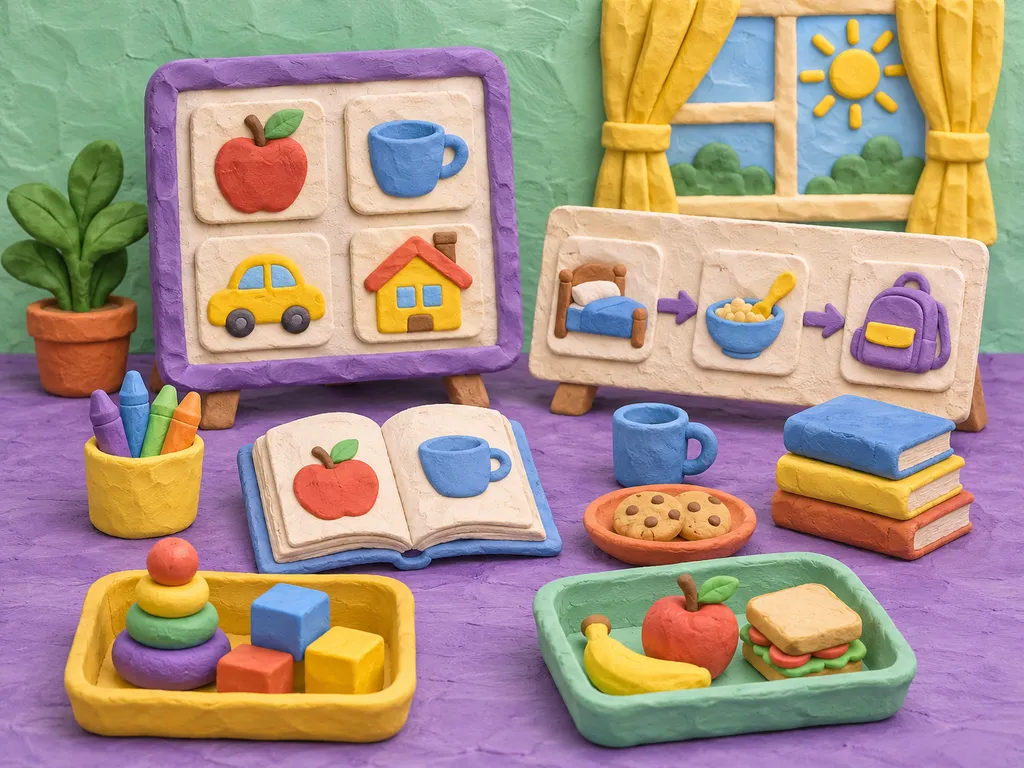
Begin with a two-minute review. Show three familiar pictures and ask, “What is it?” or “Can you find the train?” Add two or three new images, model each word, and invite pointing or repetition. Then mix the old and new cards.
Move from recognition to use. Ask, “Is the coat blue or green?” Follow with “What colour is the coat?” A ready child can add detail: “The green coat is on the chair.” End by letting your child choose one picture and ask you a question.
This rhythm keeps english through pictures for kids predictable without becoming dull. Ten focused minutes may work better than a long session packed with new cards. Stop while your child still responds with care, and save difficult images for another day.
Examples for Different Ages
Age changes the task, not only the picture. Younger children need visible objects and actions. Older learners can infer motives, sequence events, and defend opinions. Use the table as a starting point, then match the language to your child’s confidence.
If an older beginner needs single-object cards, use them without making them babyish. Choose age-respectful subjects such as sport, food, travel, music, or technology. Language level and age are separate; the material should respect both.
Practical Activities with Picture Cards
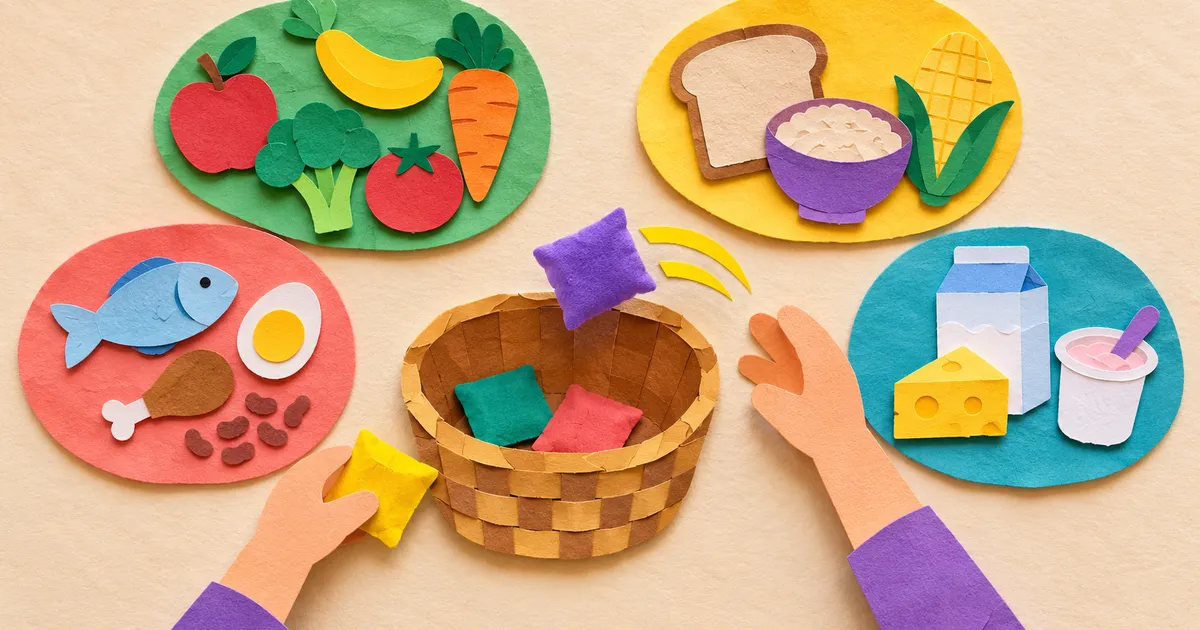
Picture practice needs no large card set. Use packaging, family-safe photos, drawings, or school materials. Sort food by colour, place toy pictures around a room, arrange action cards in order, or hide one card and ask what is missing.
Change the response as your child grows. A beginner can point to “tired.” A developing speaker can say, “The child is tired.” A confident learner can explain, “The child may be tired because the light is still on and the clock shows a late time.”
Picture Detective
Show a scene for thirty seconds, then cover it. Ask three questions: “What objects did you see?”, “Where was one object?”, and “What was someone doing?” Reveal the picture and check the answers together. Offer a younger child two choices. Ask an older child for evidence from the scene.
Common Mistakes and Signs of Progress
Do not turn every picture into a test. Model the answer when your child hesitates, then revisit the card later. Correct one point at a time. If your child says “two cat,” answer naturally with “Yes, two cats,” and continue the exchange.
To assess english through pictures for kids, watch whether support gradually decreases. Your child may progress from choosing between two cards to naming one independently, or from repeating a sentence to creating one. Record examples in a notebook instead of counting every error.
In LearnLink lessons, tutors can use pictures as prompts during one-to-one speaking practice. At home, families can revisit words in new scenes. “Bridge” becomes flexible when your child can find it, name it, describe it, and include it in a short story.
- Practice English through pictures for kids with three familiar image cards.
- Point to one image, pause, and model the English word without testing.
- Revisit the same picture book and invite your child to retell it.
- Notice fewer prompts, clearer word choices, and more spontaneous picture descriptions.
- Avoid correcting every error; praise one accurate word or complete sentence.
When a word has several meanings or pronunciations, Cambridge Dictionary is a useful check before turning it into child-friendly examples.
Frequently Asked Questions
Should Pictures Include Written English Words?
Use labels when your child is ready to connect sounds with print. For an early learner, begin with the picture and spoken word so the child listens instead of guessing from spelling. Add the written form after establishing meaning. Older beginners may benefit from seeing the word sooner, especially when English spelling differs from the expected sound.
Can We Use Translation with Picture Activities?
Yes. Brief translation can resolve confusion when a picture has more than one possible meaning. Give the English model first, check understanding, and translate only as needed. In a multilingual family, your child may know the idea in different languages. The goal is a direct route from the image to usable English, not a ban on other languages.
How Many Pictures Should We Use in One Session?
Start with a set your child can handle without losing focus. Beginners often manage new pictures mixed with familiar ones. Reduce the set if answers become rushed or random. Increase it when your child recognises the images and uses the words in short phrases, questions, or descriptions.
What If My Child Understands but Does Not Speak?
Let your child show understanding by pointing, matching, sorting, or choosing between two answers. Offer a short phrase to repeat without pressure. Speech may follow after repeated encounters with the language. If silence continues across tasks, check whether the words, picture, and question make sense before assuming your child has not learned them.
Can This Method Teach More than Vocabulary?
Yes. English through pictures for kids can support grammar, listening, speaking, sequencing, and storytelling. One scene can practise prepositions; two scenes can prompt comparisons. A picture sequence can elicit past-tense sentences and linking words. Ask for language matching your child’s level instead of expecting every picture to produce a long answer.
A short one-to-one lesson can show what level and pace fit your child — book a trial English lesson.
Stay updated on our latest tips and resources by following us on Instagram LearnLink.