How to Write an Email in English for Kids
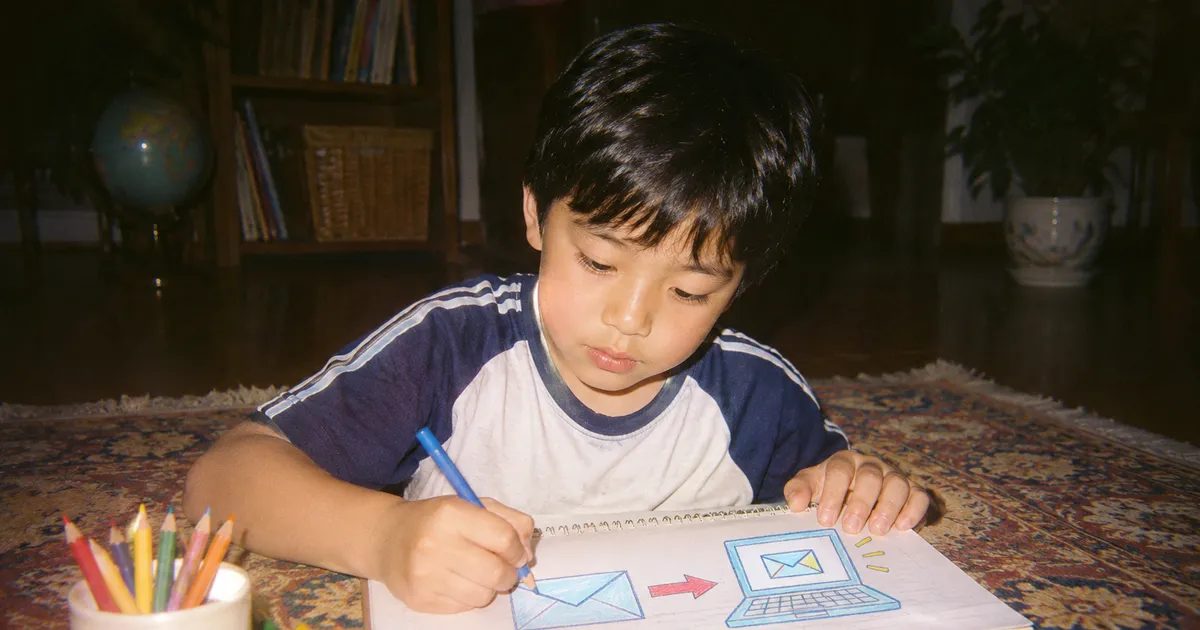
How to Write an Email in English: A Practical Guide for Kids uses six steps: choose a specific subject, add a greeting, state the reason, make a polite request, close the email, and check it. Children need a purpose, suitable tone, and enough detail for a reply. Younger children can plan aloud with an adult; older children can write and review independently.
What Children Need to Understand First
An email is a written note for a specific reader and reason. Before typing, your child should finish: “I am writing because…” They might ask about homework, thank a tutor, invite a friend, or check an activity time. One purpose makes the note easier to follow.
The reader determines the language. “Hi” and “See you” may suit a friend. A tutor, school office, or club leader calls for “Hello,” “Could you please…?” and “Best wishes.” Practise this distinction during How to Write an Email in English: A Practical Guide for Kids.
The Six Parts of a Clear Email
How to Write an Email in English: A Practical Guide for Kids follows a stable pattern. Children can apply the same six parts to everyday emails, adjusting formality and details.
An email to a close friend may omit a line, but the order helps. The subject prepares the reader, the middle carries the meaning, and the sign-off completes the email. The structure prevents one long paragraph with unrelated questions.
Grammar and Punctuation That Make Emails Clear
Grammar in How to Write an Email in English: A Practical Guide for Kids follows the purpose. Use the present simple for facts and routines: “Our lesson starts at five.” Use the present continuous for current actions: “I am working on the project.” Use the past simple for finished events: “I missed Monday’s class.”
“Can you…?” suits friendly requests. “Could you please…?” is more polite for a tutor, club leader, or unfamiliar adult. Write a complete request: “Could you send me the worksheet, please?” instead of “Send me the worksheet.”
Begin sentences and “I” with capital letters. Add a comma after a greeting and sign-off, and a question mark after a direct question. Contractions such as “I’m” and “can’t” suit ordinary emails; complete forms may suit formal messages. Avoid full sentences in capitals because they resemble shouting.
Model Emails for Different Situations
These examples make How to Write an Email in English: A Practical Guide for Kids concrete. Your child can copy the structure while matching the wording and details to the situation.
Asking a tutor about homework
Subject: Homework question
Hello,
I was absent on Tuesday. Could you please tell me which page I need to complete?
Thank you for your help.
Best wishes,
[First name]
Inviting a friend
Subject: Saturday word game
Hi,
Would you like to play our word game on Saturday? I am free after lunch. Please tell me what time suits you.
See you,
[First name]
Checking an activity time
Subject: Art club start time
Hello,
I am writing to check the start time for art club. Does it begin at 4:00 p.m. on Thursday?
Thank you.
Best wishes,
[First name]
Common Mistakes and Simple Fixes
A final review completes How to Write an Email in English: A Practical Guide for Kids. Children should correct mistakes affecting meaning or tone instead of adding difficult words. Check these points:
- An unclear subject: replace “Hello” with “Question about the reading task.”
- No greeting: add “Hi,” or “Hello,” before the email.
- A command instead of a request: change “Tell me the time” to “Could you tell me the time, please?”
- Missing context: include the lesson, date, page, or activity the reader needs to identify.
- Several questions in one sentence: place each question in its own sentence.
- No name: add a suitable sign-off and the child’s first name.
Children need a safety check too. When necessary, confirm the recipient with a trusted adult. Never send passwords, home addresses, private schedules, or personal photos. Open and check attachments before sending them. If an email feels upsetting or requests private information, pause and show an adult.
Practice Activities
Practise How to Write an Email in English: A Practical Guide for Kids through short tasks with a real reader and purpose. Younger children can say each sentence before typing. Older children can draft the email, then edit it with the six-part table.
Complete the Polite Requests
Fill each gap with can, could, or please.
1. ______ you tell me the lesson time, please?
2. Can you ______ send the link again?
3. ______ I bring my project on Friday?
Possible answers: 1. Could; 2. please; 3. Can.
Compare each answer with the reader and situation. More than one choice may be grammatical, but “Could you please…?” gives a respectful tone when addressing an adult.
Repair the Email
Rewrite this email with a subject, greeting, polite request, closing, and correct capital letters:
send me the homework i missed class
Possible answer: Subject: Missed homework
Hello,
I missed the lesson today. Could you please send me the homework?
Thank you.
Best wishes,
[First name]
Finish by reading aloud. If the draft sounds abrupt, add a greeting or polite request. If it sounds confusing, supply the missing detail. If it feels long, remove sentences that do not help the reader understand or reply.
When a word has several meanings or pronunciations, Cambridge Dictionary is a useful check before turning it into child-friendly examples.
Frequently Asked Questions
These answers address common family questions about children writing practical emails in English.
At What Age Can a Child Start Writing Emails in English?
A child can begin after forming a short spoken message. A younger child may dictate while an adult manages the keyboard and recipient address. Children who can type may follow three lines: greeting, email body, and name. The goal is not independent inbox access at a fixed age, but expressing one purpose and communicating safely.
How Long Should a Child’s Email Be?
Most everyday emails from children can be three to eight sentences. A homework question may need a greeting, one context sentence, one question, and a closing. A thank-you note may be shorter. Include enough information for the reader to understand and respond, without extra detail added merely for formality.
Should Children Use “Dear” or “Hello”?
Both are correct. “Hello” suits most messages to tutors, activity leaders, and school staff. “Dear” fits a formal message when the child knows the reader’s name or role. “Hi” suits friends and familiar adults. Keep the same formality throughout instead of mixing a formal greeting with slang.
How Can My Child Remember the Email Structure?
Repeat one checklist: subject, greeting, reason, details, closing, and name. How to Write an Email in English: A Practical Guide for Kids becomes easier after following this order for short messages. Keep the checklist beside the keyboard first. Later, recall the six parts from memory and read the draft aloud before sending.
Should a Parent Correct Every Grammar Mistake?
Correct mistakes that hide meaning, alter tone, or obscure a request. Prioritise purpose, sentence capitals, verb tense, question marks, and polite wording. Excessive correction turns communication into copying. Ask your child to find one or two problems, explain each change, and prepare the final version together.
A short one-to-one lesson can show what level and pace fit your child — book a trial English lesson.
Stay updated on our latest tips and resources by following us on Instagram LearnLink.